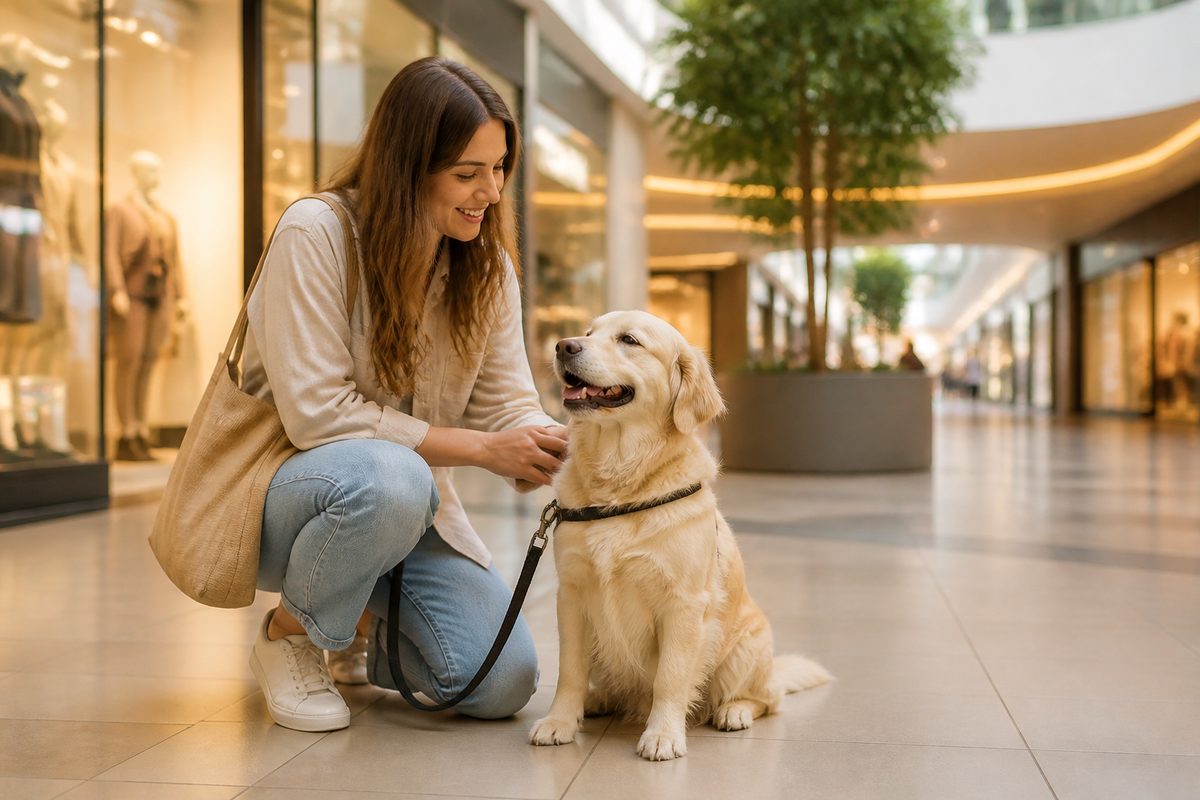
Are Dogs Allowed in Robina Town Centre?
Pet dogs should not be expected to have general access to Robina Town Centre, but a genuine assistance dog has legal protection to go in with its handler. The centre sets its own conditions of entry for pets, and those can change. So check with centre management before you bring a pet dog.
It comes down to what kind of dog you have and where you plan to go inside. This guide spells out the difference, so you don't get turned away at the door.
Why Pet Dogs and Assistance Dogs Get Different Treatment
Robina Town Centre is a large shopping mall in Robina, Queensland, on the Gold Coast, Queensland. It's private property that the public can enter, which means its owner and managers can set conditions for visitors.
Bringing a pet is a personal choice under those conditions. An assistance dog is another matter. It helps a person manage a disability.
Hence the big gap in how the law treats them. A "no pets" sign doesn't cancel the legal rights of an assistance dog handler.
| Type of dog | What to expect | What to do |
|---|---|---|
| Pet dog | No general right of entry | Ask the centre before you visit |
| Certified assistance, guide or hearing dog | Protected access to public places | Carry your identity card or other proof |
| Dog in formal training | May be covered in Queensland when with an approved trainer | Carry the trainer's documents |
| Emotional support dog | Not protected by that label alone | Check if the dog meets the legal definition |
What the Law Says About Assistance Dogs
Two main layers of law matter for a visit to the centre. One is national. The other applies in Queensland.
The national rule
The federal Disability Discrimination Act 1992 makes it unlawful to treat a person with a disability worse because they have an assistance animal. Most people just call it the Disability Discrimination Act.
Under the act, an animal can count as an assistance animal in one of three ways:
- It's accredited under a state or territory law.
- It's accredited by an animal training group listed in the regulations.
- It's trained to reduce the effect of a person's disability, and it meets hygiene and behaviour standards suited to a public place.
The Queensland rule
Queensland also has the Guide, Hearing and Assistance Dogs Act 2009. It gives people with certified dogs a right to enter public places with them, and shopping centres fit that idea.
Approved trainers working with dogs in training are covered too. Handlers and trainers should carry their identity card. It makes any chat with staff quick and simple.
When staff can ask questions
The Disability Discrimination Act lets a business ask for evidence that an animal is an assistance animal. It can also ask for evidence that the animal is trained to meet hygiene and behaviour standards.
A polite request for proof isn't automatically discrimination. But if you can't show evidence when asked, you may lose the act's protection for that visit.
Food Rules Inside the Centre
Food safety is a major reason animals face limits in places that serve food. Think supermarkets, cafes, restaurants and any food court.
Food Standards Australia New Zealand develops the food standards used in both countries. The name gives it away: it's a joint system shared by Australia and New Zealand.
The Australia New Zealand Food Standards Code says food businesses must not allow live animals in areas where food is handled. There's one exception, for assistance animals in customer dining and drinking areas.
Here's how that plays out:
- Kitchens and food prep areas: animals stay out, including assistance dogs.
- Customer seating: an assistance dog can stay with its handler.
- Outdoor dining: a venue may welcome pet dogs in some outdoor areas, but that's up to the business and any rules that apply at the site.
One friendly cafe doesn't change the wider rules. Even if a venue allows dogs outside, you may not be able to walk a pet dog through the centre to reach it.
A Pet Store Does Not Change the Rules
Some shoppers assume a pet store means pets are welcome throughout the building. Fair guess. Not a safe one.
A store's own policy only covers that store. The common areas, walkways, lifts and entrances still fall under the centre's conditions of entry.
Before you bring a dog along for a pet store trip, confirm two things:
- The store accepts dogs on a lead inside its shop.
- The centre lets you bring your dog through the common areas to get there.
If either answer is no, leave your dog at home. You could also ask if the store offers online orders or a pick-up service.
Why a Busy Centre Can Be Hard on Dogs
Rules aside, a large centre can be a rough place for a pet. Basic animal behaviour helps explain why.
Dogs lean heavily on smell and hearing, and a crowded indoor space can swamp those senses. The calm dog you know at home may act very differently somewhere new and noisy.
Common stress triggers inside a large centre include:
- Moving escalators and automatic doors
- Shiny floors that feel slippery
- Crowds, prams and shopping trolleys
- Loud music and sudden noises
- Strong food smells and dropped food
- Children who rush up to pat them
Assistance dogs get specific training to work calmly in places like this. Those good manners are earned, so don't expect a pet dog to cope the same way.
How to Plan a Visit When You Own a Dog
A little planning saves a wasted trip. Follow the steps that fit you.
If you have an assistance dog
- Carry your identity card or other evidence of your dog's training.
- Keep your dog clean, under control and on its lead or harness.
- Ask centre management about the easiest entrances, lifts and toilet areas for your dog.
- If you're refused entry, calmly explain your rights and ask for a manager.
Still not fixed? You can raise it with the Australian Human Rights Commission or the Queensland Human Rights Commission. Both can take discrimination complaints.
If you have a pet dog
- Check the centre's website for its current conditions of entry.
- Call the concierge or customer service desk if the website is unclear.
- Ask if your plans include any part of the centre where dogs are welcome.
- Arrange for your dog to stay home if the answer is no.
Better Places to Take Your Dog
If your dog needs an outing, pair your shopping trip with some time outdoors. Go before or after the centre, once your dog can rest safely at home.
A dog park gives your dog room to move and sniff, which no shopping mall can offer. City of Gold Coast publishes details of its off-leash areas, so check its website for current locations and rules.
Other simple options include:
- A morning walk through your local streets or parks, on a lead
- A visit to a dog-friendly cafe with outdoor seating
- Asking a friend or a pet sitter to mind your dog while you shop
- Using click-and-collect, if your store offers it, to keep your trip short
Walk in the cooler parts of the day when it's warm. Hot paths can hurt paws, so test the ground with your hand first.
Bottom Line
Are dogs allowed in Robina Town Centre? Assistance dogs have strong legal protection, while pet dogs shouldn't expect general entry unless the centre confirms it.
Remember these points before you go:
- The centre's conditions of entry decide the position for pets.
- The Disability Discrimination Act 1992 and Queensland law protect assistance dog handlers.
- Food safety rules keep animals out of food handling areas.
- Carry proof if your dog is an assistance dog.
- Call the centre first if you have any doubt.
A short call before you leave home gets you the current answer. It also spares you and your dog a hot, stressful trip for nothing.